Classroom Content
Sphere provides educators with viewpoint diverse resources to bring conversations to the classroom and equip students to engage in civil discourse. Sphere offers lesson plans, discussion questions, videos, and publications on various topics for use in the classroom that are exclusively nonpartisan.
Collections
collection
America’s 250th
Sphere Education Initiatives’ 250th collection integrates the study of civics across disciplines to help students identify, analyze, and evaluate the underpinnings of the founding principles outlined in the Declaration of Independence through the framework of civil discourse.
collection
Getting Started with Civil Discourse
Learn how civil discourse can help you foster strong discussions and connections for your students. Explore our lessons, conversation frameworks, teacher tools, and explainers adaptable for all disciplines and grade levels to get started.

collection
Human Progress
This collection explores historical figures and cities who epitomize human progress and innovation worldwide. Students will examine influential individuals and places in science, art, and social reform, appreciating their transformative impact on shaping our world.

collection
Civil Discourse and Economics
This collection aims to cultivate critical thinking skills in students as they explore microeconomics and macroeconomics, examining the role of government in the economy through lessons that encourage analysis, evaluation, and understanding of economic principles and government interventions.

collection
Politics and Society
Politics and society are interconnected and shape our daily lives. Values and principles should steer decisions on healthcare, education, immigration, and national security. Fostering civil discourse amidst disagreement is important for constructive governance and social harmony.

collection
Civil Discourse and English Language Arts
This equips teachers with engaging lesson plans to promote respectful and inclusive discussions around literature, enabling students to develop critical thinking skills, empathy, and effective communication while exploring diverse perspectives and themes in literary works.

collection
Constitution and Law
Examine the Constitution’s principles and interpretation. How to balance personal freedoms with government intervention in areas such as health or national security? Consider the implications of constitutional amendments or law changes on rights and governance.
collection
Civil Discourse in Science and Technology
This collection is curated with lessons and resources that support the unique nature of civil discourse discussions in the science classroom. Lessons help students explore the intersection of the sciences, economics, public policy, and human progress.

Modules from

module
Centers of Progress
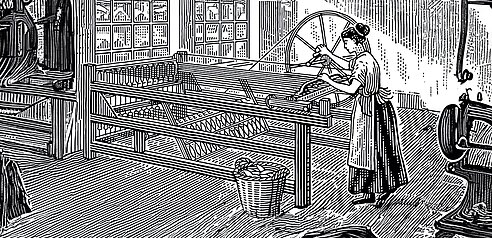
This module explores the locations that have served as hubs for human progress and innovation throughout world history. Students will delve into the stories of significant cities and regions, examining their contributions in fields such as science, technology, arts, and governance, fostering a deep appreciation for the interconnectedness of societies and the impact of key cultural and intellectual centers.
module
Heroes of Progress
This module explores people who have made extraordinary contributions to human wellbeing throughout world history. Students will delve into the stories of important individuals, examining their contributions in fields such as science, technology, arts, and governance, fostering a deep appreciation for innovation, openness, and curiosity.

Latest Lessons
Lesson
Bias Bite for Leaders #10
This mini‐lesson is designed to help educators recognize and better understand the Dunning‐Kruger effect through a structured professional development protocol. This bias can help us take on new challenges by giving us a sense of self‐confidence and self‐efficacy; however, it can also promote poor decision‐making through inaccurate assessments and a resistance to feedback.

Lesson
Bias Bite for Leaders #9
Affect Heuristic/Bias
This mini‐lesson is designed to help educators recognize and better understand the affect heuristic through a structured professional development protocol. Although this bias can allow us to make decisions quickly and efficiently, it can also promote biased responses that are based on emotions, not facts.

Lesson
Bias Bite for Leaders #8
Belief Perseverance
This mini‐lesson is designed to help educators recognize and better understand belief perseverance through a structured professional development protocol. Although this bias can encourage individuals to stand firm in their beliefs, it can also hinder critical thinking and perpetuate stereotypes and prejudice.

Lesson
Bias Bite for Leaders #7
The Pygmalion Effect
This mini‐lesson is designed to help educators recognize and better understand the Pygmalion effect through a structured professional development protocol. This cognitive shortcut is one in which high expectations boost motivation and lead to improved performance while low expectations create a negative self‐fulfilling prophecy and underperformance.

Lesson
Bias Bite for Leaders #6
The Bandwagon Effect
This mini‐lesson is designed to help educators recognize and better understand the bandwagon effect through a structured professional development protocol. This cognitive shortcut can increase social cohesion by creating a sense of belonging and identity, but it may also suppress individuality and critical thinking in an effort by the individual to conform to group norms.

Lesson
Bias Bite for Leaders #5
Negativity Bias
This mini‐lesson is designed to help educators recognize and better understand negativity bias through a structured professional development protocol. This cognitive shortcut can motivate us to take action to address negative situations and avoid future problems; however, it can also lead to a pessimistic outlook and contribute to feelings of stress and anxiety.

Lesson
Bias Bite for Leaders #4
Availability Heuristic/Bias
This mini‐lesson is designed to help educators recognize and better understand the availability heuristic through a structured professional development protocol. This cognitive shortcut can help with quick decision‐making based on readily available information in our memory, but it can also lead to biased judgments that may overestimate or underestimate the frequency or probability of events.

Lesson
Bias Bite for Leaders #3
Dichotomous Thinking
This mini‐lesson is designed to help educators recognize and better understand dichotomous thinking through a structured professional development protocol. This cognitive shortcut can help with quick decision‐making by simplifying complicated issues into manageable categories; however, this bias can also lead to oversimplifications that can reinforce biases and even lead to extreme views.